03 / FOUNDATIONS↗
How language models, context, and memory fit together
A practical map of generation, working context, retrieval, tools, and systems of record.
Evergreen explainerReference cabinet / Eight field notes + one tool
Move from foundations to practical use, architecture, evaluation, safety, and cost. Every page says what kind of evidence it uses and what it does not establish.
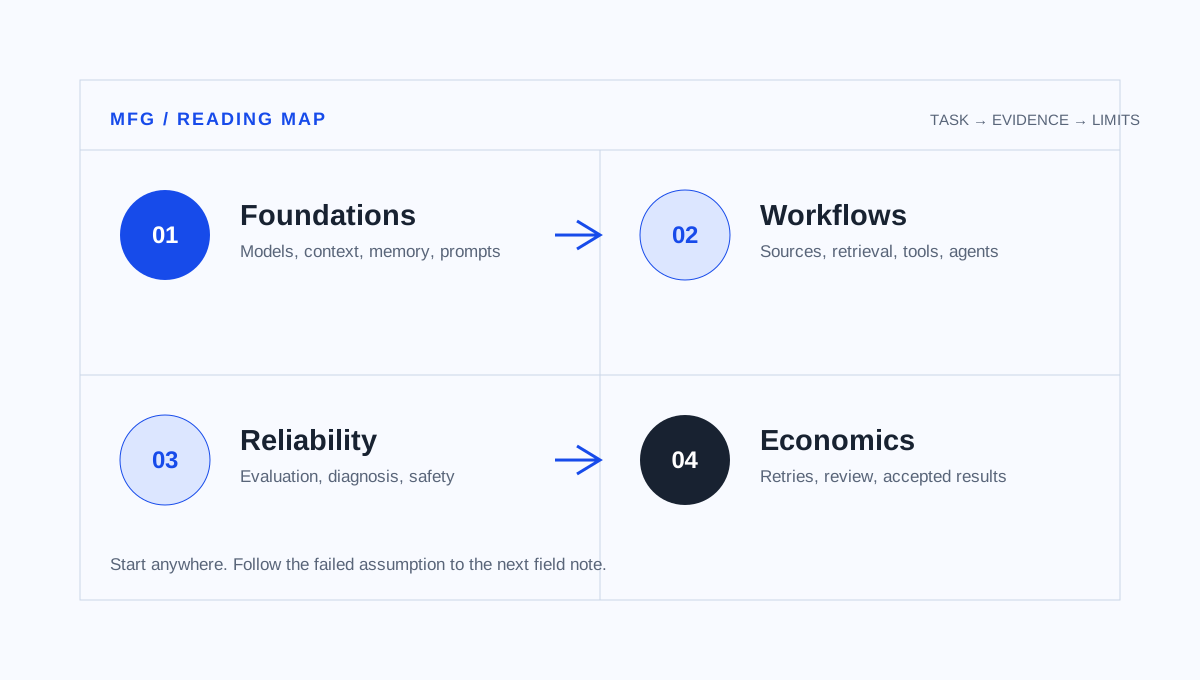
9 entries
Foundations
The product is more than the model. These notes make the layers and instructions explicit.
A practical map of generation, working context, retrieval, tools, and systems of record.
Evergreen explainerDefine the objective, evidence boundary, output, unknown state, and acceptance checks.
Reusable methodWorkflows & systems
Choose the smallest architecture that can meet the task and preserve a review trail.
Move from discovery to claim ledger, synthesis, counterevidence, and publication checks.
Step-by-step workflowMatch system complexity to path variability, external evidence, and action risk.
Architecture guideReliability & safety
Find the failed layer, use representative cases, and keep authority outside the model.
Read claims with their task, conditions, limits, and missing coverage—then build a representative check.
Method noteSeparate model, retrieval, OCR, schema, tool, permission, and interface failures.
Diagnostic orderSet data, permission, confirmation, recovery, and human-review boundaries.
Risk guideEconomics
Request price is one input. Retries, review, and acceptance determine the practical cost.
Measure retries, review time, and the share of outputs that pass the acceptance rule.
Method noteUse your own request costs, review time, retry rate, and acceptance rate. Calculation stays in your browser.
Interactive tool